


Closed Die Forging.
Shape, Strength, Repeatability. Closed die forging is built for components that need forged strength with repeatable geometry. Amsol supports forged automotive, railway, agriculture, machinery, and industrial components where grain flow, fatigue resistance, dimensional control, and production economics must work together.
From Billet to Finished Forging — 6 Steps
Every closed die forged component at Amsol follows a controlled route from drawing review to die design, billet heating, forging, trimming, heat treatment, CNC machining, and final inspection.


Closed Die Forging Capability
Closed die forging supports forged strength, repeatable geometry, fatigue performance, controlled grain flow, tooling-led economics, CNC finishing, and inspection-ready production parts.

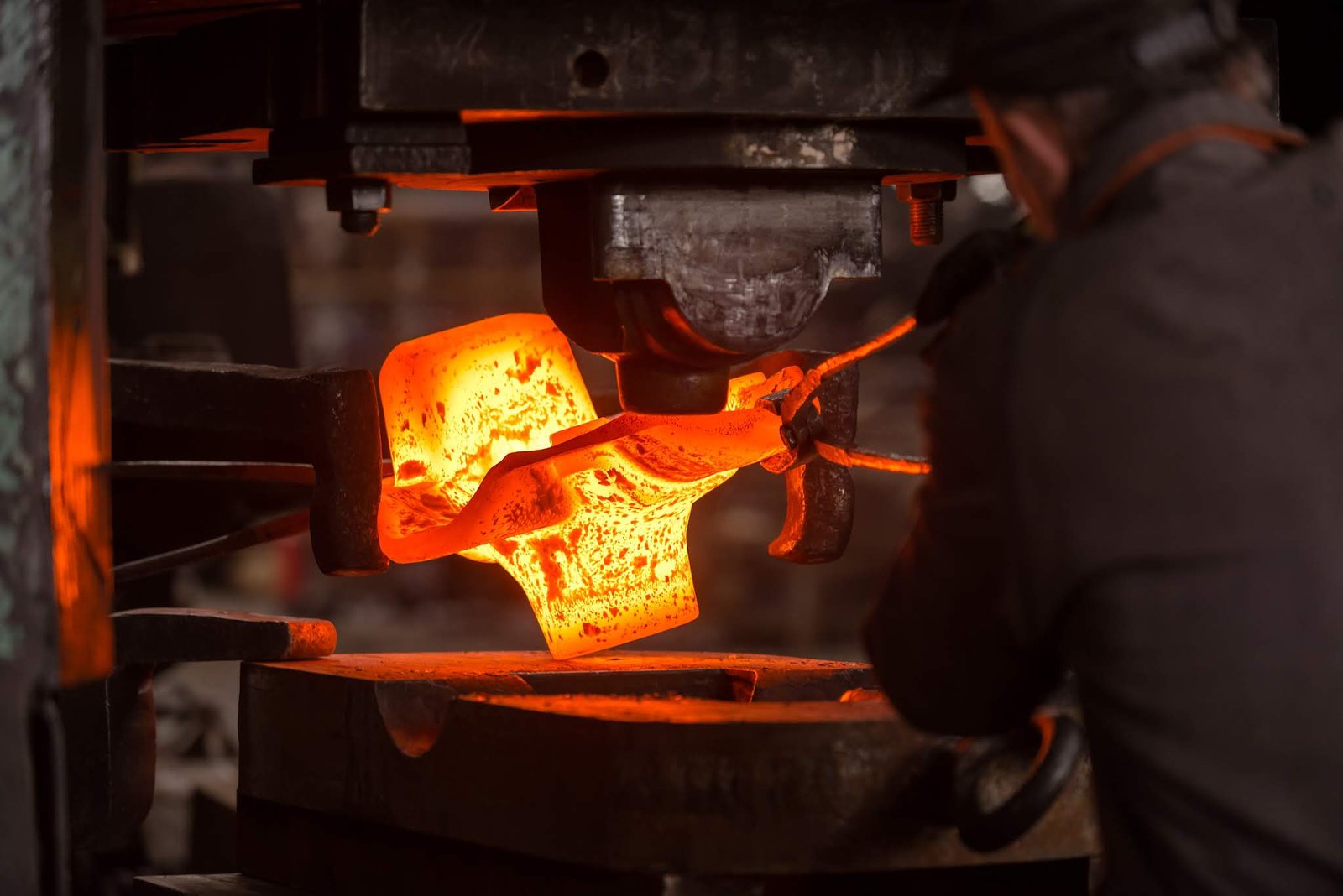
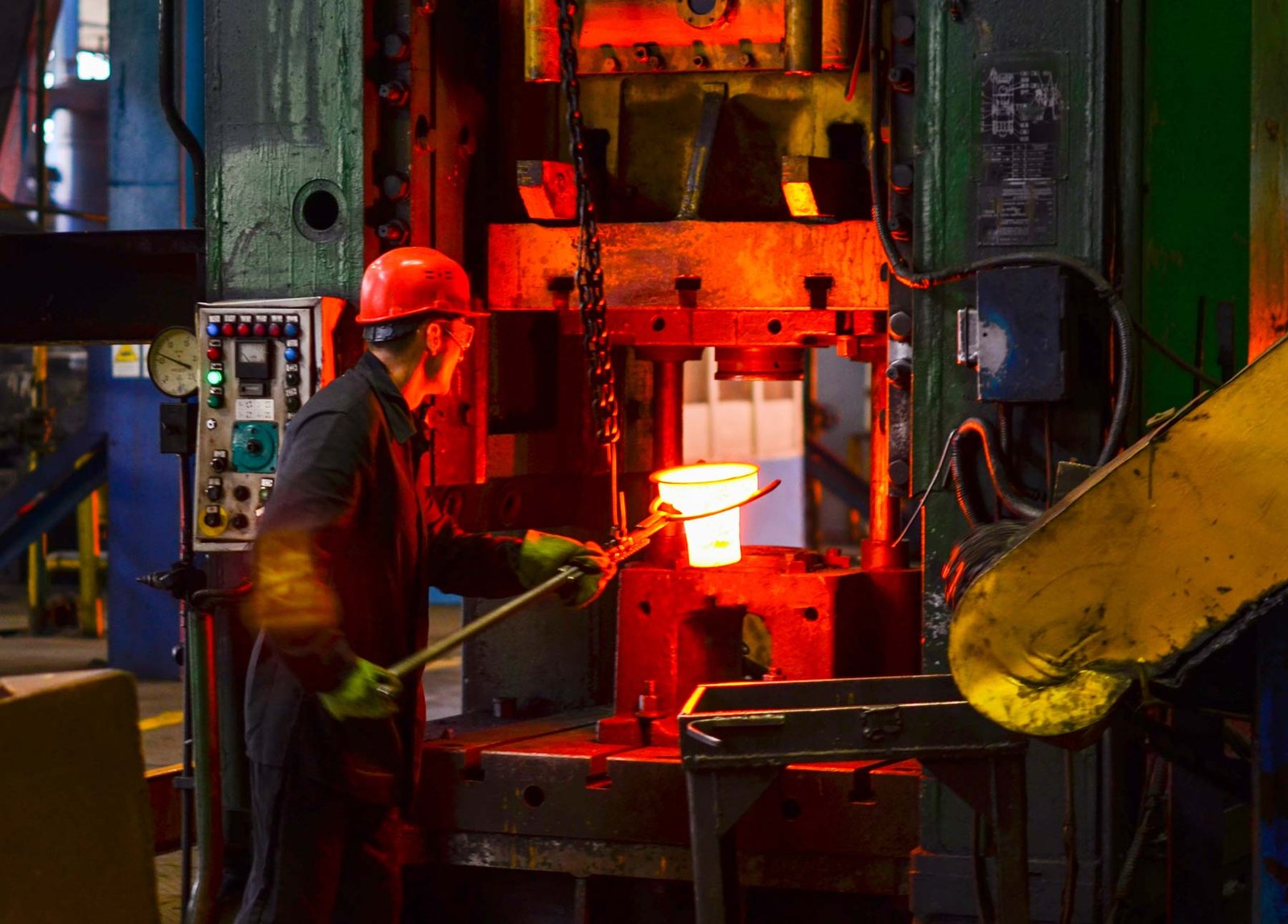
Forging Grades for Strength, Toughness, and Repeatable Production.
Amsol selects closed die forging material based on load path, fatigue duty, corrosion exposure, machining need, heat treatment route, and final production volume.
| Material | Typical Use | Strength |
|---|---|---|
| EN8 / C45 | General forged parts, levers, brackets | Cost-effective strength and machinability |
| EN24 / 4140 | High-load pins, railway parts, yokes, linkages | Toughness, fatigue resistance, Q&T performance |
| Stainless Steel | Corrosion-resistant forged parts | Marine, process, food, and fluid system applications |
| Micro-Alloy Steel | Automotive and high-volume forged parts | Good strength with possible heat-treatment savings |
Choose Closed Die Forging When Strength and Repeatability Matter
Closed die forging becomes the right route when production volume, forged grain flow, near-net geometry, material saving, and final machining economics work together.
| Choose Closed Die Forging When | Why It Helps | Amsol Route |
|---|---|---|
| Part has medium-to-high volume. | Tooling cost gets balanced by repeatable forged output. | DFM, die design, forging, trimming, heat treatment, CNC, inspection. |
| Strength is better achieved through grain flow. | The metal flow follows the part geometry and load path. | Closed die forging for yokes, levers, brackets, hooks, pins, and linkages. |
| CNC from solid creates too much waste. | Near-net forging reduces material removal and cycle time. | Forging plus CNC for holes, faces, bores, grooves, and threads. |
| Casting is not strong enough for the application. | Forging improves fatigue resistance and impact-duty performance. | Material grade review, heat treatment route, hardness check, and inspection. |
| Repeatable forged geometry reduces final machining cost. | Stable shape reduces downstream finishing effort. | Die-led production with CNC finishing and CMM reports. |
The Closed Die Forging Route — From Billet to Finished Forging
Replace placeholders with Amsol facility photography. Use tooling, billet heating, closed die forging, trimming, heat treatment, CNC machining, and final inspection images.



Where Amsol Closed Die Forgings Go
Closed die forged components are used where production repeatability, forged strength, fatigue resistance, CNC-fitment accuracy, and part economics decide performance.
Closed Die Forging Quality Verified Through Die Control, Traceability, Testing, and Inspection.
Closed die forging quality depends on tooling control, heat-number traceability, heat treatment discipline, hardness verification, CNC inspection, and final CMM reporting.
Have a Forged Component Drawing?
Share It.
Amsol reviews your part for closed die forging feasibility, tooling cost, machining allowance, material grade, heat treatment, and production economics.